BIMNovate
Brand, presentation system and site for a BIM consultancy selling coordination across three markets.
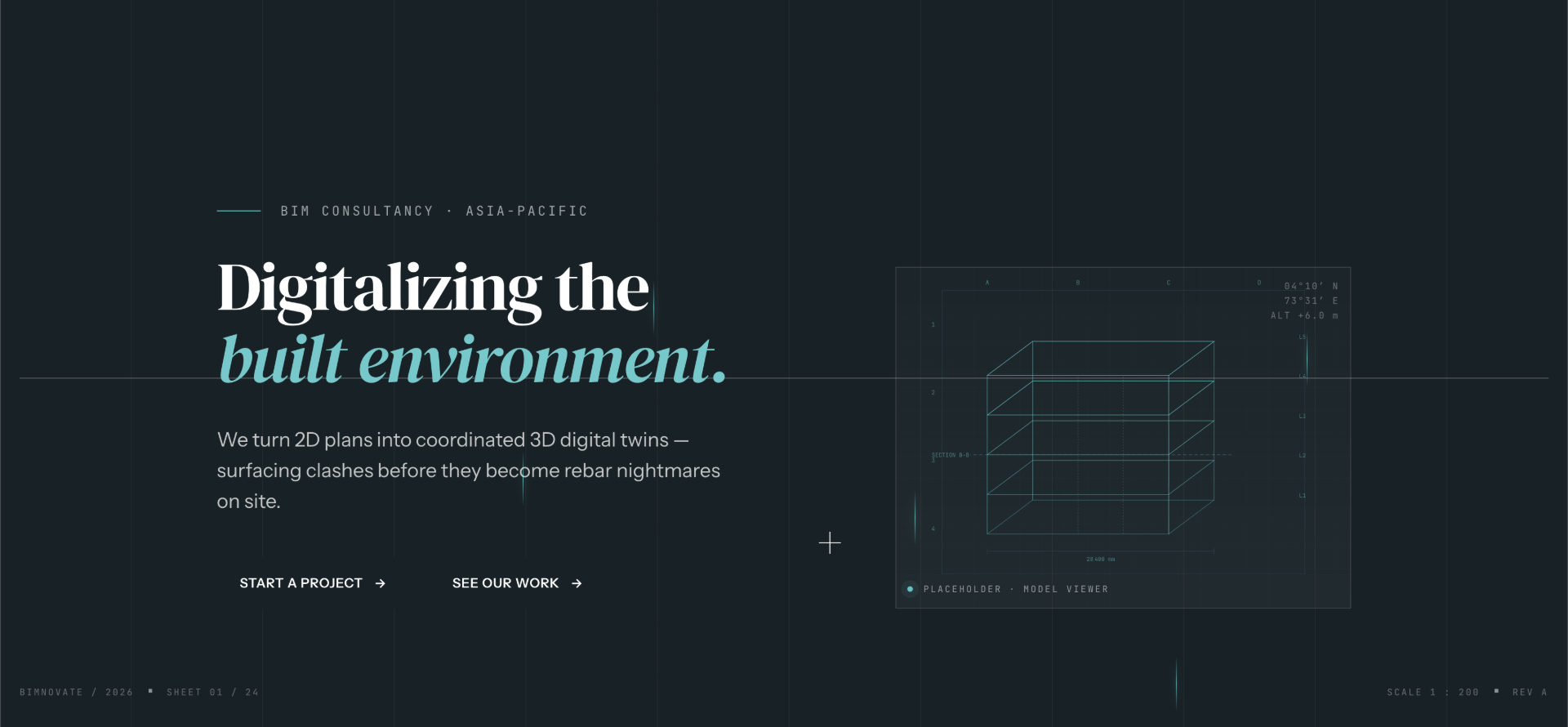
BIM's value is the disaster that never happened. The job was making that visible.
Design leads, and it leads everywhere. Brand elements, a presentation template and the site were built as one system in one engagement — the website is not a skin over somebody else's identity, it is that identity's first application. Same team, same decisions, no handoff in the middle.
Selling an absence.
A BIM consultancy sells coordination: catching the clash in the model before it becomes rebar cut wrong on site. The whole product is an absence — the delay that didn't happen, the rework nobody paid for.
That is a hard thing to put on a homepage, and the sector's default is to show software logos and hope. Meanwhile the practice was pitching across three markets with no shared identity to pitch with.
Three offerings, framed as the three things clients arrive saying.
A language lifted from the deliverable.
Sheet numbers, revision marks, scale bars, section cuts, coordinate readouts. The site is dressed as a drawing set, because that is what the practice actually hands over.
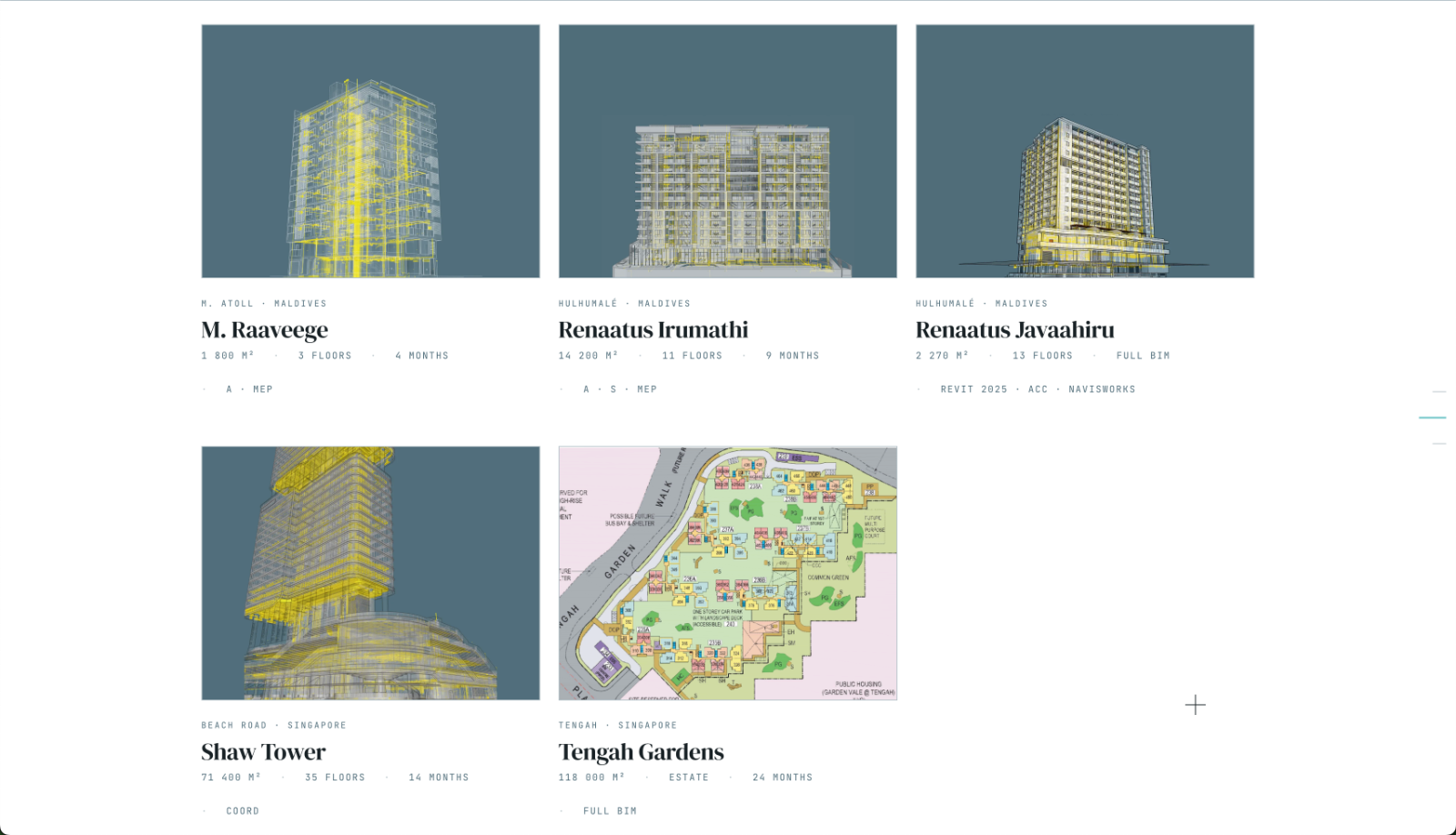
One language, three surfaces.
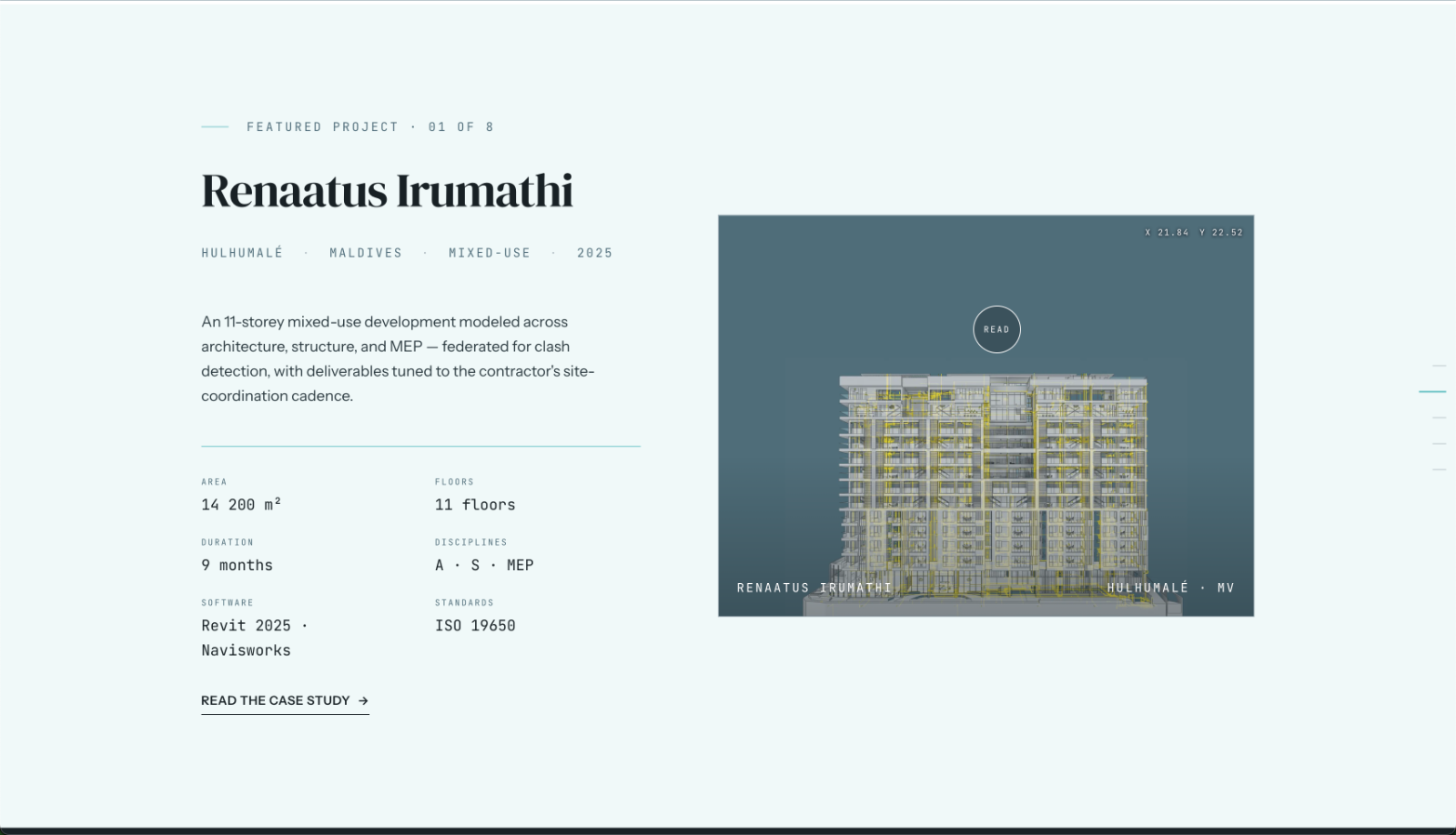
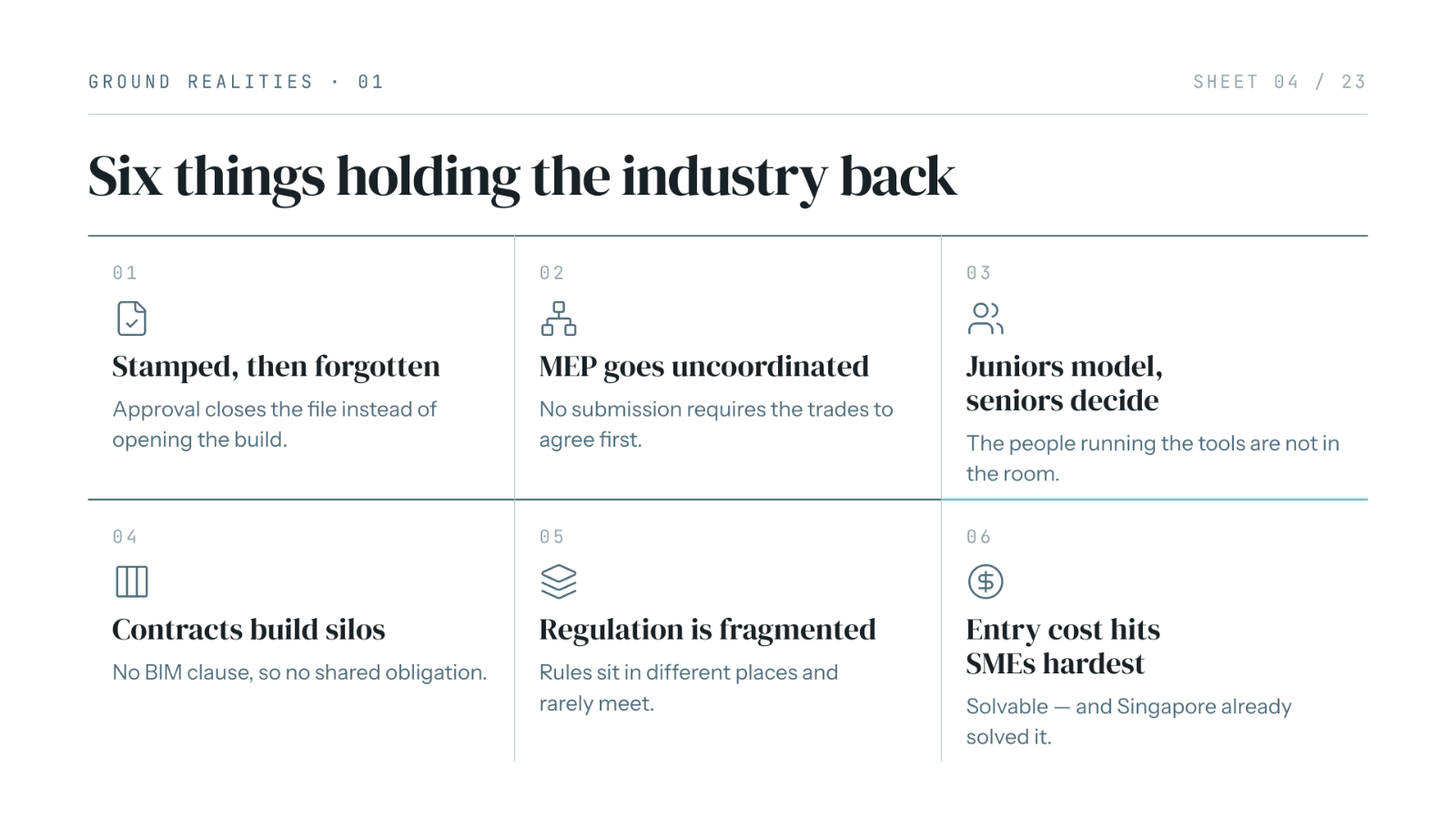
One system, six applications.
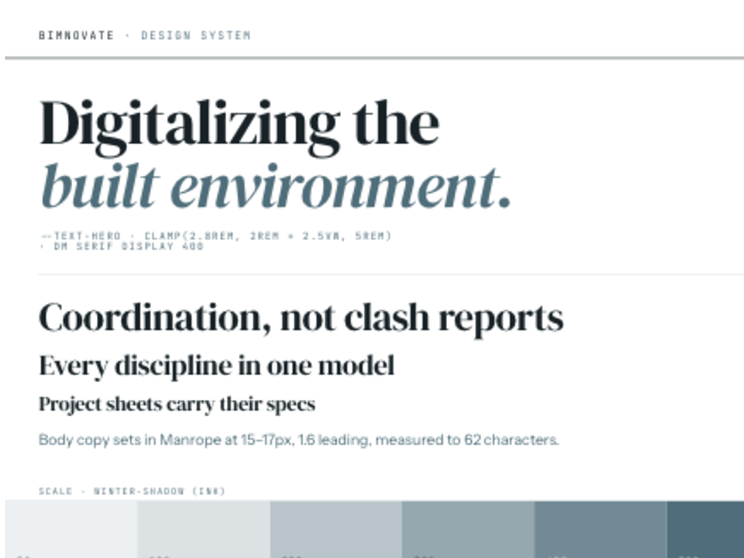
A language from the deliverable
Sheet numbers, revision marks, scale bars, section cuts. The site is dressed as a drawing set, because that is the work.
Brand elements
Wordmark, type system, colour and the technical furniture — so the practice looks like itself in a deck, a document or a tender.
Services, by the question asked
Three offerings framed as the three things clients arrive saying.
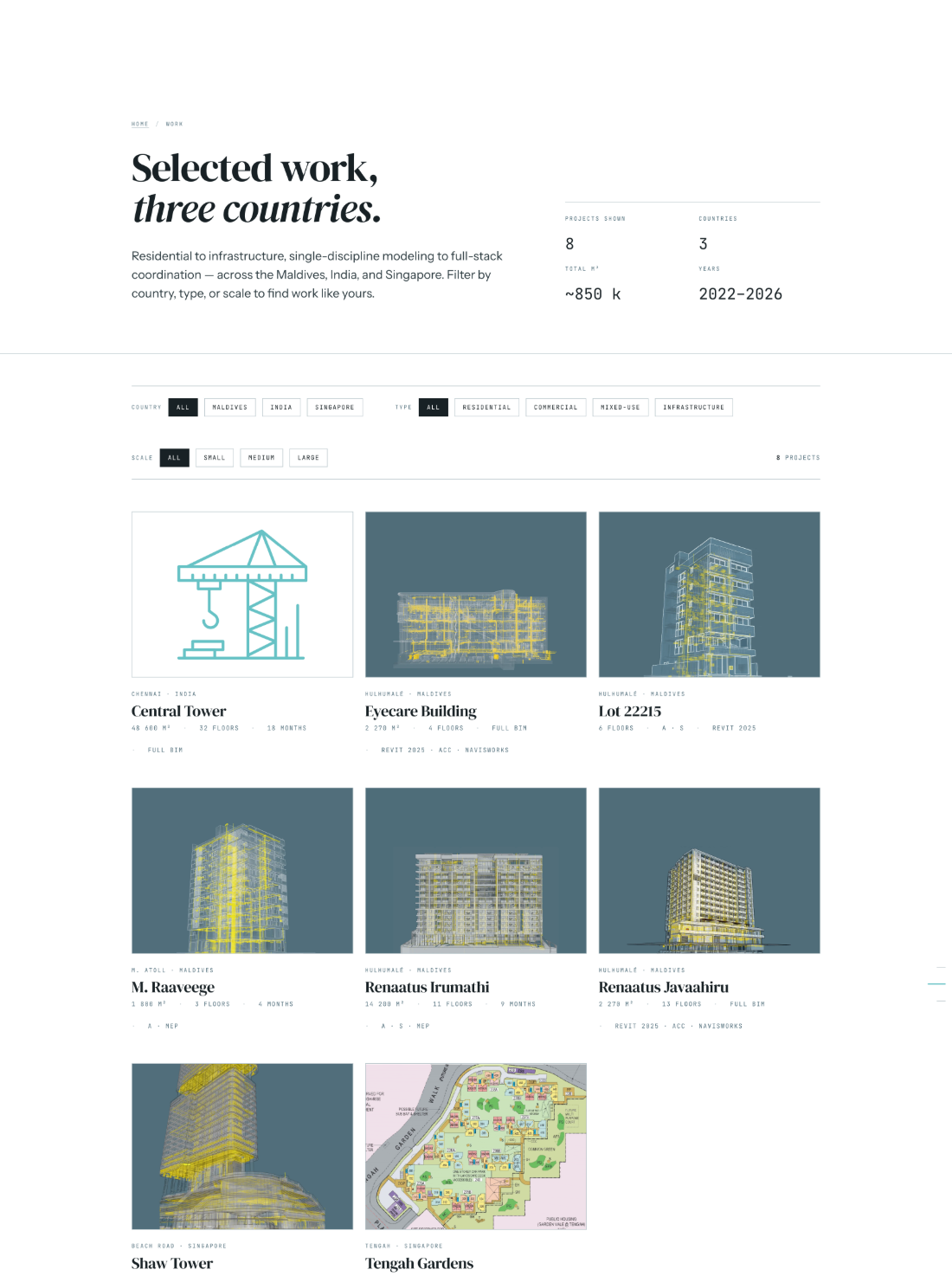
Project pages that carry specs
Area, floors, duration, disciplines, software and standard on every project — what a contractor scans for.
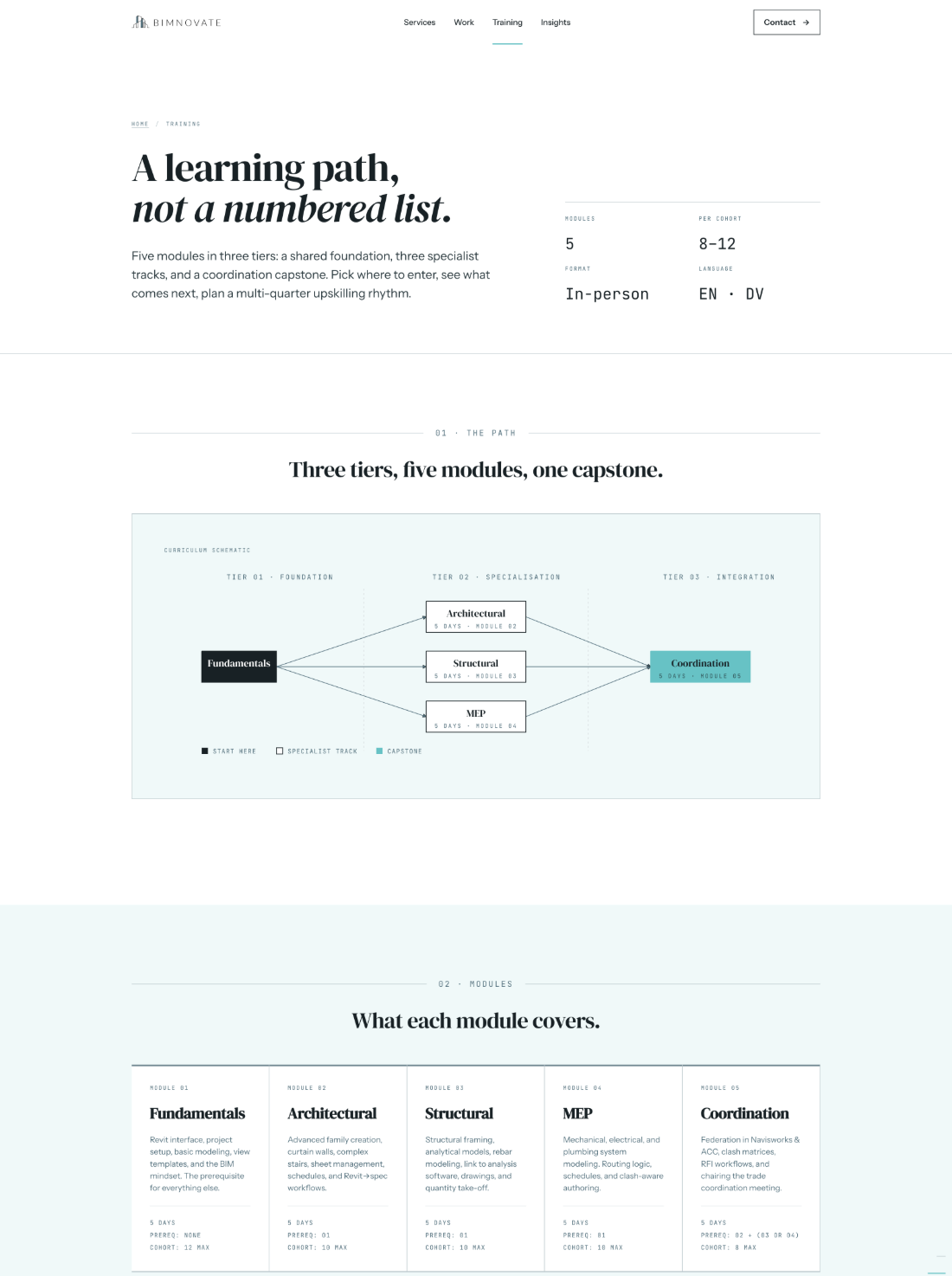
Training as a path
Modules declaring prerequisites, outcomes and tools, with live session dates and seat counts.
A presentation template
The same system in deck form, so a pitch in Chennai and the site in Malé are one practice.